We don't know for sure as there is no long-term data, but we can look at other conditions.
Acute respiratory distress syndrome (called Ards) develops in patients whose immune systems go into overdrive, causing damage to the lungs.
"There is really good data that, even five years down the line, people can have ongoing physical and psychological difficulties," says Mr Twose.
Dr James Gill, a GP and lecturer at Warwick Medical School, says people also need mental health support to improve recovery.
"You're finding breathing difficult, then the doctor says 'We need to put you on a ventilator. We need to put you to sleep. Do you want to say goodbye to your family?'.
"PTSD [post-traumatic stress disorder] in these most severe patients is not unsurprising. There will be significant psychological scars for many."
There remains the possibility that even some mild cases may leave patients with long-term health problems - such as fatigue.
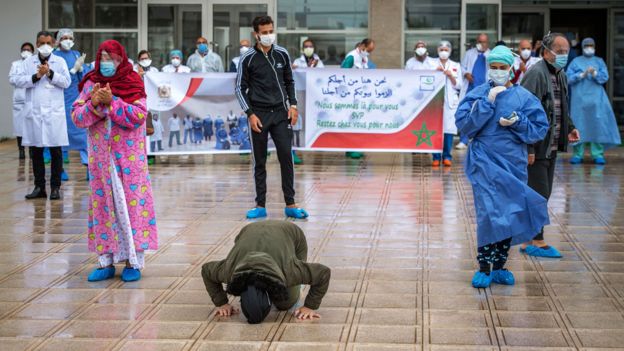
How many people have recovered?
Getting an accurate figure is difficult.
As of 1 May, Johns Hopkins University reported more than 1,021,000 people had recovered out of 3.2 million people known to have been infected around the world.
 GETTY IMAGES
But countries use different recording methods. Some are not publishing recovery figures and many mild infections will be missed.
Mathematical models have estimated between 99-99.5% of people recover.
Comments
Post a Comment