GETTY IMAGES
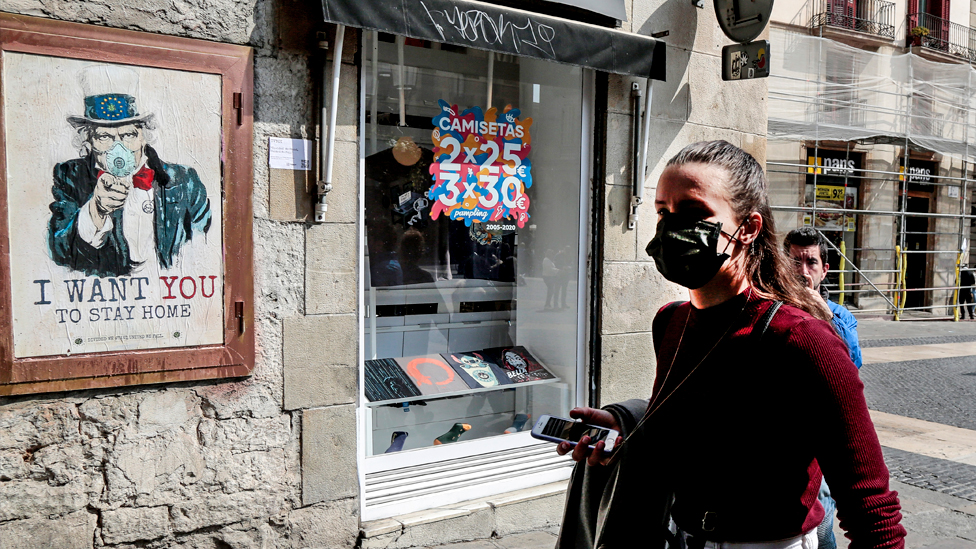
Restrictions to deal with new coronavirus outbreaks have been imposed in parts of Europe.
So, what are countries doing?
France: Large gatherings banned in some regions
EPA
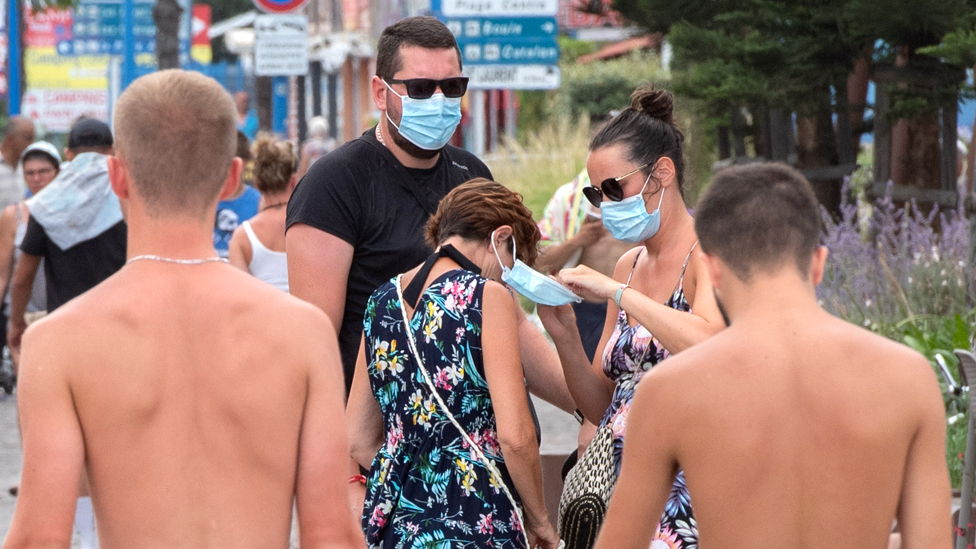
France's lockdown was imposed on 17 March, but restrictions began to ease on 11 May.
However, following fresh outbreaks in July, the government made face masks compulsory in enclosed public spaces.
It said it would impose local lockdowns rather than another national one, if there was a second wave of infections.
Since 10 August, masks have been compulsory outdoors in busy parts of Paris for anyone aged 11 and over. Hundreds of other municipalities across France have also introduced this rule, including in Toulouse, Nice, Lille and Lyon and some beach resorts.
From 1 September, masks will have to be worn in most workplaces as well, where people share space in offices and factories.
People entering the UK from France have to quarantine for 14 days.
Spain: Travel warnings after infection spike
On 4 May, Spain set out its plan to start easing one of the strictest lockdowns in Europe.
While coronavirus appears to be under control in much of the country, Catalonia - including Barcelona - and neighbouring Aragón in the north-east saw a huge spike in July.
REUTERS
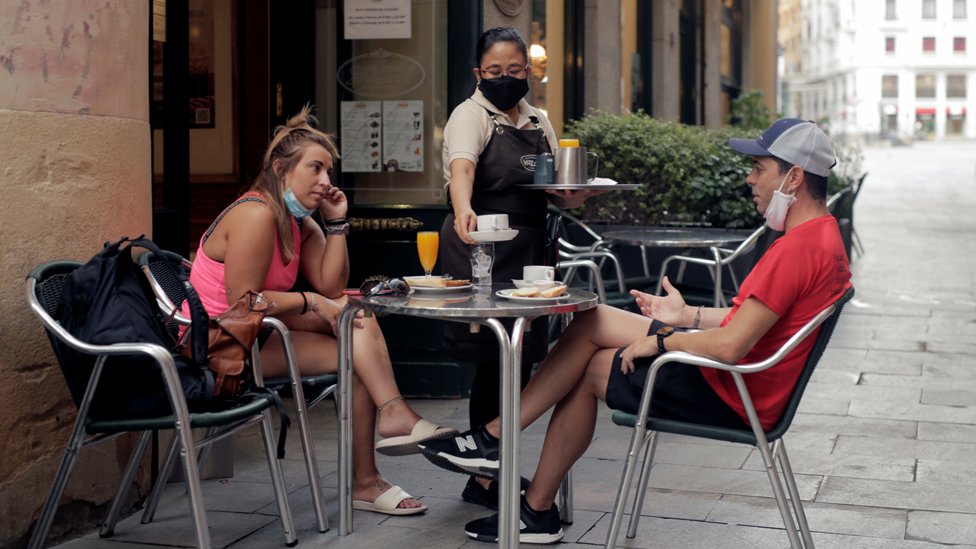
Stay-at-home orders have been issued to four million residents in Catalonia, and stricter measures could yet be introduced.
Madrid has seen a spike in cases, leading to compulsory face masks in public - regardless of whether social distancing is possible.
In a huge blow to tourism, some European countries issued travel warnings for the affected regions. The UK imposed a 14-day quarantine for anyone arriving from Spain.
Germany: Compulsory airport testing
Germany began easing its lockdown in April, allowing small shops to open.
In May, shops of all sizes and schools started to reopen. Bundesliga football matches resumed "behind closed doors".
EPA
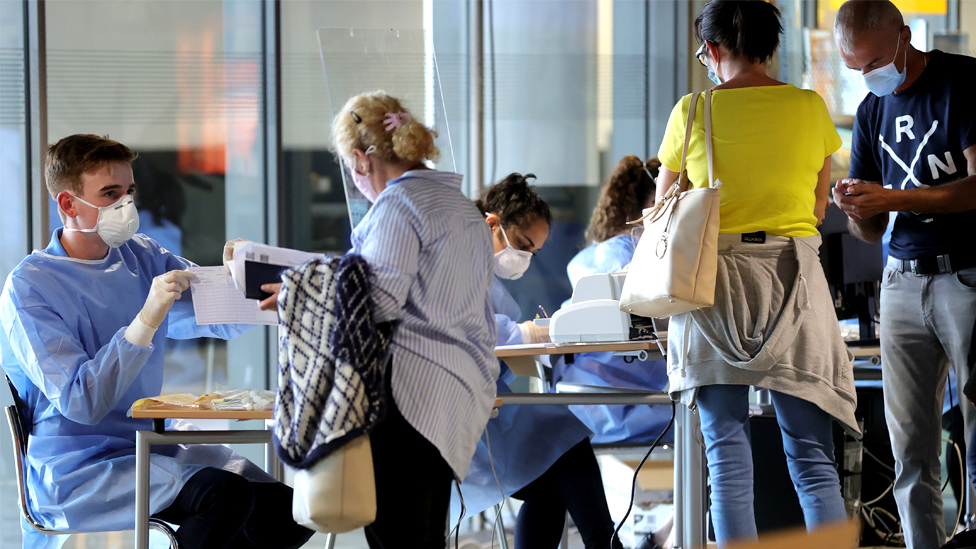
However, a surge in cases linked to a meat-processing plant near the western town of Gütersloh triggered new local lockdowns.
Testing at airports is now compulsory for all travellers arriving from high-risk countries.
New rules to contain local outbreaks in future, such as travel bans in and out of coronavirus hotspots, have been drawn up.
Children are starting to go back to schools in August and in some areas they will have to wear masks at all times.
Italy: Nightclubs and dance venues closed
REUTERS
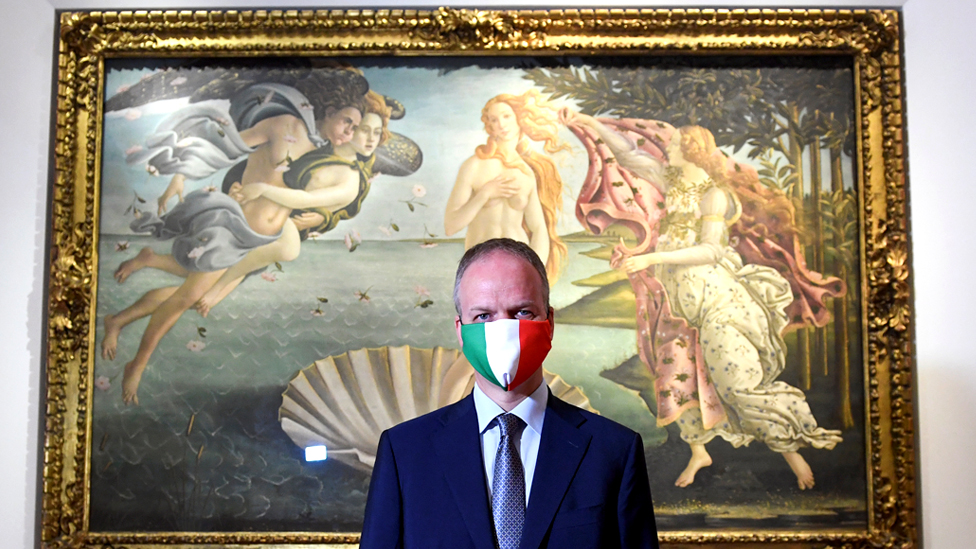
Italy's strict lockdown started on 7 March and was gradually lifted two months later.
Bars, restaurants, hairdressers, museums and tourist sites all reopened with strict social distancing and the compulsory wearing of face masks.
On 3 June, Italy reopened its borders and ended regional travel restrictions.
But with infections rising again in Italy and across Europe, travellers arriving from Croatia, Greece, Malta and Spain now face mandatory testing for Covid-19.
Authorities ordered closures of all dance halls and night clubs, including outdoors ones, from 17 August.
You also now have to wear a face mask from 18:00 to 06:00 local time in all public spaces across Italy where social distancing isn't possible.
Belgium: Further easing delayed
REUTERS
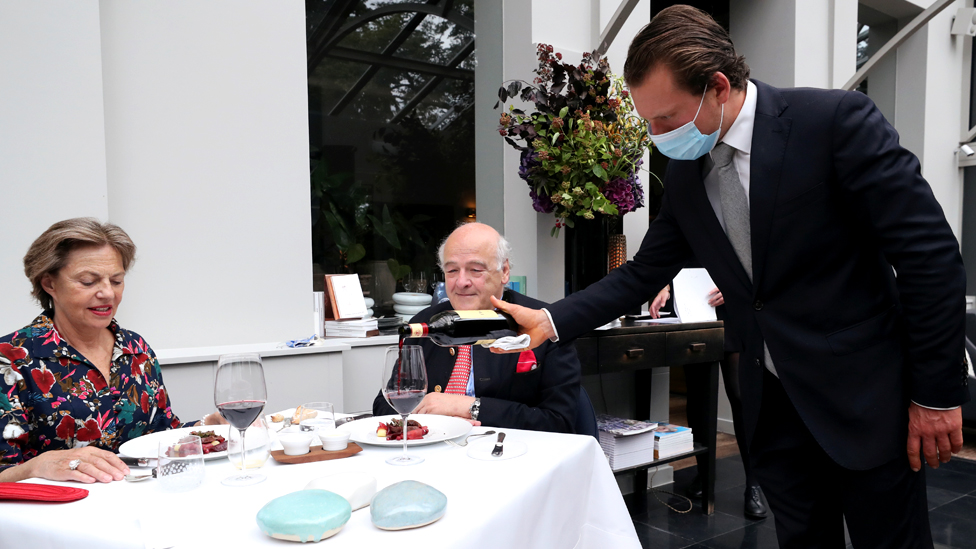
In Belgium, shops, schools, markets, museums, zoos, hairdressers and beauty salons were gradually allowed to open from early May.
Sports events, religious services and village fetes have been allowed since 1 July, with a maximum of 200 participants or spectators indoors and 400 outside.
However, Belgium has seen a rise in new infections.
In the capital Brussels, wearing a face mask became compulsory in all public areas on 12 August amid a rise in cases. Police checks are being increased to ensure that people follow the new rules.
The city of Antwerp introduced a curfew at the end of July. In restaurants, a maximum of four people are allowed to sit at a table, although larger households are allowed to sit together.
The government decided not to go ahead with the next phase of reopening and has issued warnings against travel to a number of areas in Europe.
At the same time, several European counties issued warnings against all but essential travel to Belgium. The UK has imposed a 14-day quarantine.
Nightclubs remain closed and no major events, such as festivals, are allowed.
Netherlands: Travel warnings issued
On 1 July, the Netherlands lifted the limit for people inside or outside shops and some other services, provided they stick to 1.5m social distancing.
Further measures to ease the lockdown were brought forward. For example, brothels were allowed to open on 1 July, from their planned reopening in September.
REUTERS
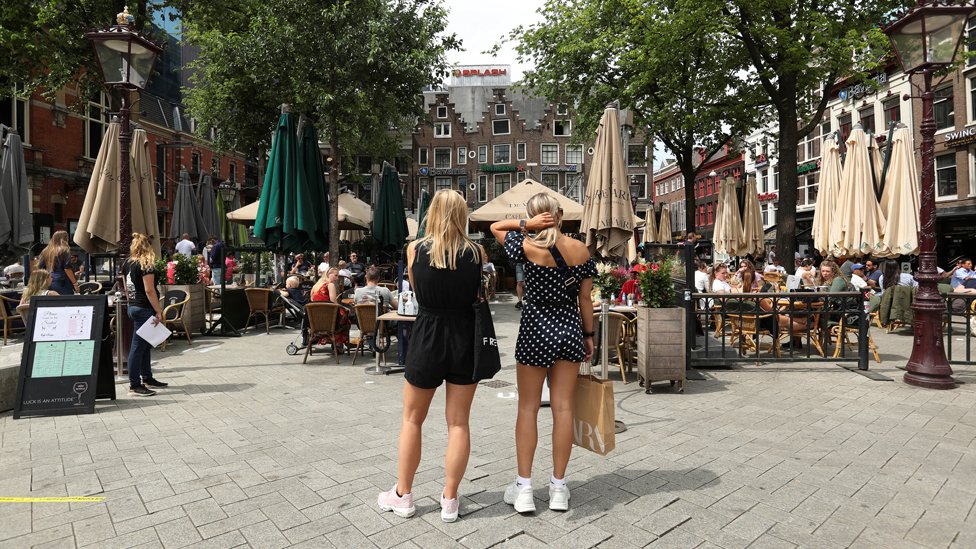
However, the rate of infection started to climb and on 6 August new measures were announced, including local closures of cafes, cinemas, museums and amusement parks for 14 days in case of an outbreak. Local authorities can impose curfews and further restrictions.
The government warns against all but essential travel to Sweden, Croatia, Romania, Bulgaria and Malta.
It also has warnings for some areas in Belgium, Portugal, Spain and the UK.
Voluntary testing will be introduced at airports for those arriving from high risk areas.
Meanwhile, from 15 August anyone coming to the UK from the Netherlands will have to quarantine for 14 days.
On 17 August, children started to return to school in the north of the country. Extra hygiene measures have been put in place, but social distancing will apply to adults only.
Portugal: Nightclubs remain closed
Portugal has had fewer coronavirus cases and deaths than some other south European nations.
The government reopened different sectors of the economy every 15 days: restaurants, coffee shops, museums and beaches opened in May and June.
REUTERS
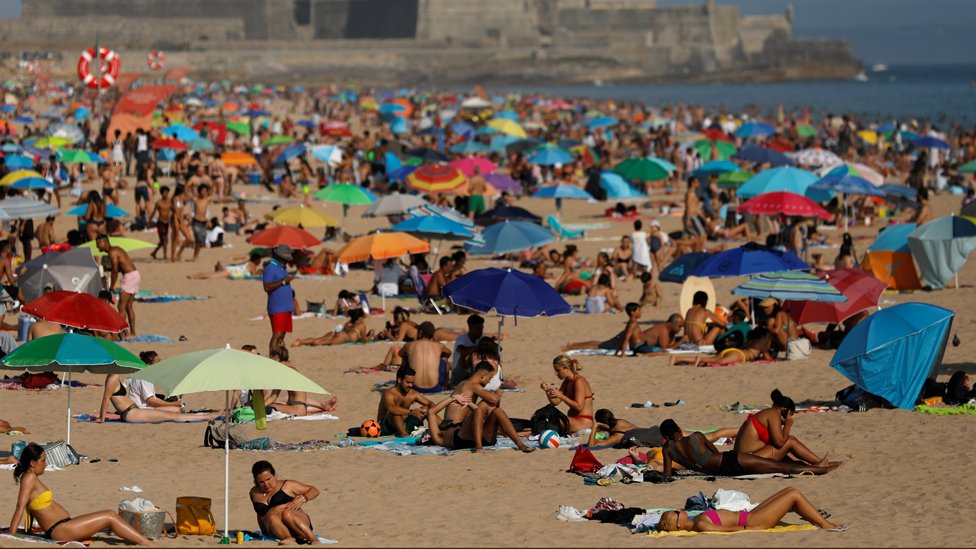
The final phase of reopening started on 1 July.
Hotels have mainly reopened, but nightclubs remain closed.
The UK has advised against all non-essential travel to Portugal, since Lisbon saw a spike in infections. The Portuguese government complained, as British tourists usually flock to both Portugal and Spain in summer.
Greece: Airport testing available for passengers
Greece recorded its first Covid-19 case on 26 February and the government swiftly imposed a lockdown.
Relaxation measures started in late April, with a particular focus on opening up the country for the summer.
However, the number of cases started rising again in July.
COSTAS BALTAS
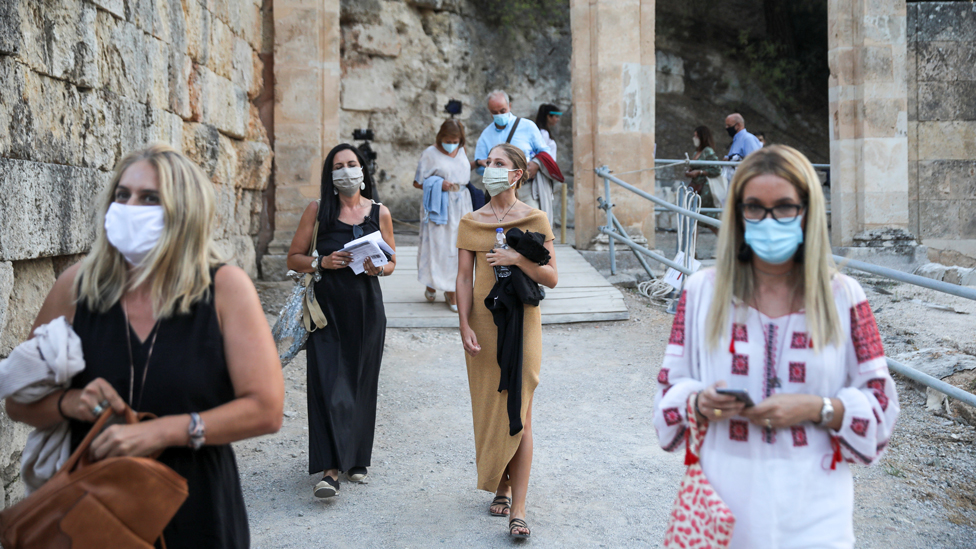
Since 29 July, face masks have been compulsory in supermarkets, shops, cafes, banks, government offices and hairdressers.
Travellers to Greece have to fill in forms so that they can be tracked in case of emergencies.
From 17 August, bars, clubs and restaurants in Athens and several areas across the country have to close at midnight.
On the Aegean island of Mykonos and the northern Greek region of Halkidiki new measures will be introduced on 21 August. Parties, open-air markets and religious processions will be banned, gatherings limited to nine people and groups in restaurants to four (or up to six from the same family) and masks will become compulsory outside as well as inside.
Republic of Ireland: Non-essential foreign travel discouraged
Ireland has had a stricter lockdown than the UK, with residents only allowed to exercise within 2km (1.2 miles) of their homes.
The government still advises against non-essential travel overseas. This includes Britain, but does not apply to Northern Ireland. It also includes all travel by cruise ship.
There is a limited list of countries which are exempt from this advice, including popular tourist destinations such as Italy and Greece. People coming back from these locations are not required to restrict their movements.
Comments
Post a Comment