Coronavirus: Obesity increases risks from Covid-19, experts say


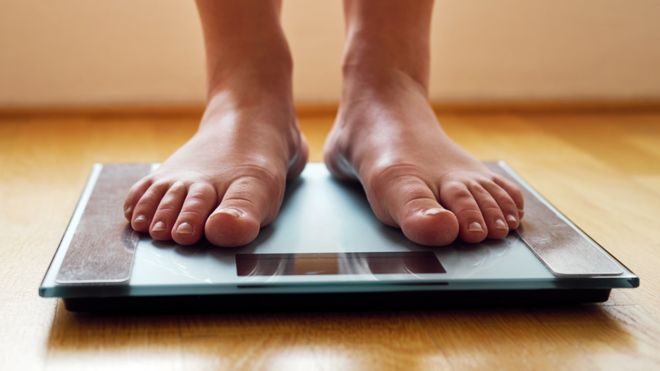
Person standing on scalesImage copyrightGETTY IMAGES

Being obese or overweight puts you at greater risk of serious illness or death from Covid-19, experts say after examining existing studies.

The review of evidence by Public Health England found excess weight put people at greater risk of needing hospital admission or intensive care.

And the risk grew substantially as weight increased.

The release comes ahead of an expected government announcement of new measures to curb obesity.

Dr Alison Tedstone, chief nutritionist at Public Health England, said the current evidence was clear, that being overweight or obese puts you at greater risk of serious illness or death from Covid-19, as well as from many other life-threatening diseases.

"Losing weight can bring huge benefits for health - and may also help protect against the health risks of Covid-19," she said. "The case for action on obesity has never been stronger."

The UK has one of the highest levels of obesity in Europe. Almost two-thirds of adults in England are overweight or obese, with similar figures in Wales, Scotland and Northern Ireland.

Presentational grey line

Am I overweight?

The NHS says most adults with a body mass index (BMI) of 25 to 29.9 are overweight, while those with a BMI of 30 to 39.9 are classed as obese.

Body mass index is calculated by dividing a person's mass in kilograms by the square of their height in metres.

Another measure of excess fat is waist size - men with a waist of 94cm or more and women with a waist of 80cm or more are more likely to develop obesity-related problems.

Presentational grey line

Supporting people to achieve and maintain a healthy weight may reduce the severe effects of Covid-19 on the population, especially among vulnerable groups who are most affected by obesity, the report said.

Prof Susan Jebb of the University of Oxford, said we already know that older people, men, those from South Asian and some oth


SYMPTOMS: What are they and how to guard against them?

TESTING: Who can get a test and how?

YOUR QUESTIONS: Our experts have answers

LOOK-UP TOOL: How many cases in your area?

GLOBAL SPREAD: Tracking the pandemic

THE R NUMBER: What it means and why it matters

According to the report, while some data suggests that more people have exercised during lockdown, evidence indicates that the nation's exercise levels have not increased overall.


Meanwhile, snack food and alcohol sales from High Street shops have increased.


Boris Johnson is expected to announce new measures soon to combat obesity, including a ban on TV junk food adverts before 21:00.


The measures are yet to be finalised, but are also likely to include a ban on online ads for unhealthy foods, and limits on in-store promotions.er ethnic groups, and people living in more deprived areas, are at increased risk from Covid-19.

"Over and above these things, this review shows that excess weight is another very important risk factor," she said.

There was anecdotal evidence that some people were struggling with their weight during the pandemic, she added, which offered a "re-set moment" for everyone to think about their lifestyle.

Comments

Popular posts from this blog

Coronavirus: Can California's economy survive the latest surge?

  Image copyright EPA Image caption California's coronavirus outbreak is hurting the tourism industry Earlier this year, California was praised for an early lockdown, which helped stem the pandemic in the US state. But cases have since surged. What's next for the Golden State, known for Hollywood, sunshine and celebrity? Scott DeAngelis spent a decade building up a lucrative tour guide operation on Hollywood Boulevard. For years tourists flocked to the Hollywood Walk of Fame and there was always enough work to go around. But now there are more palm trees than people and the stars once hard to find under the feet of potential customers, now bake, exposed to the midday sun. Hope was briefly on the horizon when California Governor Gavin Newsom announced a phased reopening plan. He said it would be a dimmer switch, gradually shining a brighter light at the end of this dark tunnel. But cases began to rise again after the Memorial Day weekend in late May - and the dimmer switch has n...

Coronavirus: Are women and children less affected?

  Image copyright SCIENCE PHOTO LIBRARY Women seem to be less likely to die from coronavirus than men, and children appear to be less likely to die than other age groups. Most people will get a mild infection, but the pattern is clear in the most severe cases. So what is going on? All the information we have is coming from a massive study by the Chinese Centres of Disease Control. It looked at 44,000 people and showed 2.8% of infected men died, compared with 1.7% of women. And 0.2% of children and teenagers died compared with nearly 15% of people over the age of 80. Are women and children less likely to catch coronavirus? There are two ways of explaining the findings. Either these groups are less likely to be infected in the first place, or their bodies are more able to cope with the virus. "Normally with new viruses circulating, everybody gets infected: that's the important point," says Dr Bharat Pankhania, from the University of Exeter. This is because there is no imm...

Coronavirus: How will deaf schoolchildren cope with face coverings? And other questions

  Children are returning to school throughout the UK, many of them for the first time since lockdown in March. Here are some of your questions about the challenges ahead. Questions and answers Back to school Your questions Skip Back to school Is it a good idea to send kids back to school if they have a heart problem? from Zoe Corran in Bangor BBC News People who have a serious heart condition are more vulnerable to coronavirus. Many children with heart conditions will, until recently, have been shielding to protect themselves. Experts are now looking into whether as many children will need to shield in the future,  given the reduced level of risk posed to children. Across the UK, children who have been shielding are expected to return to school. However, if a child has an extremely serious condition, your doctor can advice otherwise and parents should engage with the child’s school about the best way to continue their studies. If there is an increase in cases in an area and ...