REUTERS
As children start a new school year in the UK, pupils are also returning to the classroom across Europe. What measures are being put in place?
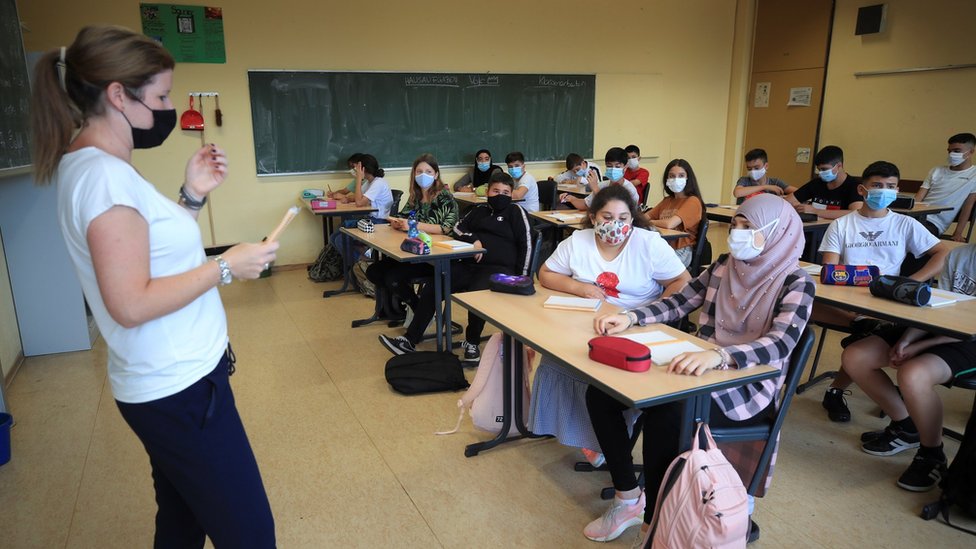
France: Teachers will wear masks
French schoolchildren will be returning to school on 1 September with a somewhat relaxed version of the rules under which some of them went back to school in May.
For example, there will no longer be a limit on class sizes, and distancing is not compulsory in situations where it would stop a school being able to fit all its pupils in.
The exception to that is the use of masks, which will be compulsory indoors for staff and students over the age of 11, even if they manage to stay more than 1m apart. This means teachers will take lessons wearing masks.
Schools are no longer forced to prevent different classes and groups of students from mixing, but they are encouraged to stagger start and finish times to prevent large groups building up.
Floors, desks and surfaces that are touched regularly, such as door handles, must be cleaned and disinfected at least once a day.
Italy: Class sizes will be smaller
Italy closed all schools in March and imposed one of the strictest lockdowns in Europe.
Children haven't had any classes even after lockdown measures started to ease in May.
The schools are now due to return on 14 September.
Students will be seated 1m apart so class sizes will become smaller. They will be divided into various learning groups, entry will be staggered and schools will be open for lessons on Saturdays.
Students and teachers will have to wear masks, and teachers will wear face shields as well. Lessons will be held outdoors where possible or in big spaces like theatres or museums.
Distance learning will be available for secondary school students who live with vulnerable family members.
EPA
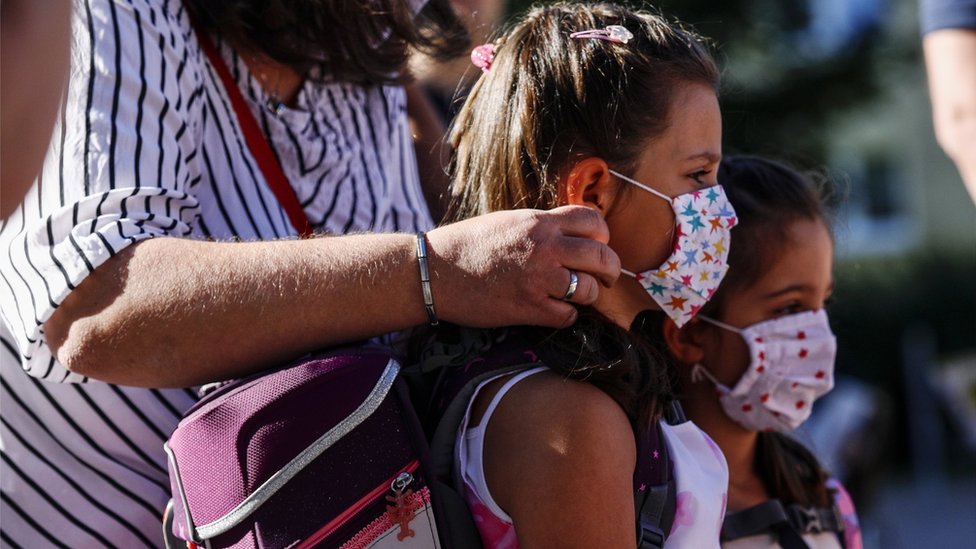
Germany: Do not touch the banisters
Germany's 16 states are in charge of education and the school year starts at different times in different states, but they all agreed in July that children should return to schools once the summer holidays were over.
Extra hygiene measures are advised, such as frequent handwashing and keeping hands off the banisters when taking the stairs. Masks are not obligatory and free testing is available for teachers.
Classes have been reorganised into so-called "cohorts" - groups of several hundred students. There are no social distancing rules within a cohort, but each group has its own area in the school grounds, cloakrooms and canteens.
In some states, both pupils and teachers will have to wear masks, while in others masks will not be required. Some are making them compulsory in corridors and other communal areas.
The state of Mecklenburg-Western Pomerania in the north-east of the country was the first to reopen schools.
However, a secondary school in the state had to close in the first week, after a teacher tested positive for coronavirus. A primary school will also close for two weeks after one of the pupils tested positive.
REUTERS
Spain: Toilets to be cleaned three times a day
There have been some pupils back at school since late May, but it has been voluntary. Now the plan is for all students to return in September.
The government has issued guidelines which will be adapted depending on the situation in each of Spain's 17 autonomous regions.
Students will have to maintain a distance of at least 1.5m between themselves, except for younger children, who will instead be allowed to be in bubbles of 15 to 20 pupils who will not have to distance.
Schools will be asked to prioritise outdoor activities and stagger start, finish and break times.
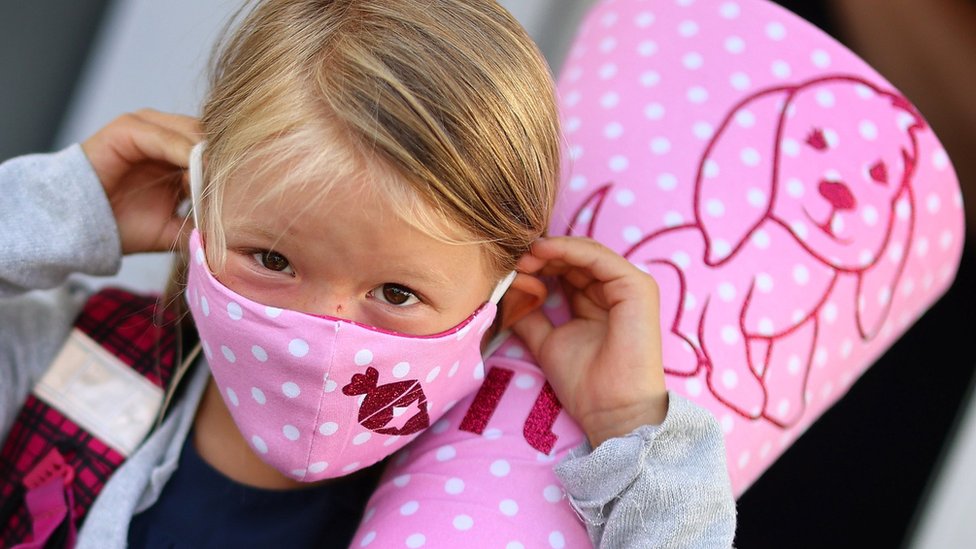
Masks will be compulsory for over-sixes on school transport, and will be required for pupils and teachers if distance of 1.5m cannot be maintained, except for children in bubbles.
School facilities will need cleaning at least once a day, with the toilets cleaned three times.
EPA
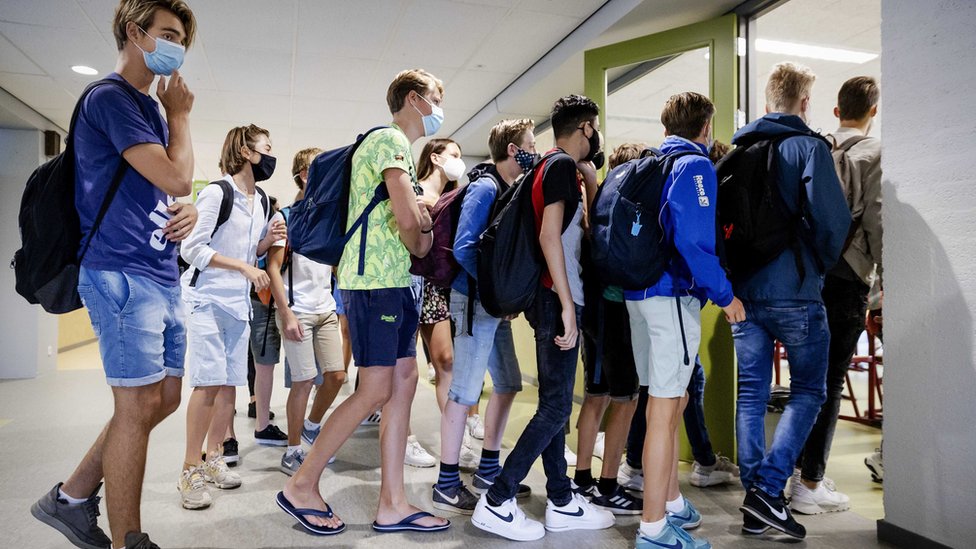
Netherlands: Air conditioning should be checked
In the Netherlands, both primary and secondary schools will be providing the normal number of teaching hours for all pupils.
But the government says students may be exempted from coming into school if they, or somebody they live with, fall into high-risk categories such as having certain underlying health conditions.
The government has not made the wearing of face masks compulsory in schools, although the broadcaster NOS has found that some schools are asking pupils to wear them.
Schools have also been encouraged to make sure that their ventilation systems are working properly to help limit the spread of coronavirus.
Denmark: Pioneered staggered start times
Denmark was, with Norway, the first European country that allowed primary school children to return to classrooms after the lockdown.
Primary school children started returning from mid-April.
Reopening of schools for children aged 12-16 followed, from 18 May.
Other countries closely followed Denmark's example and adopted many of the measures first tried there: staggered arrival at schools, handwashing and cleaning throughout the day, keeping children in small groups and with as little contact with others as possible.
The new school year is starting in late August, despite the numbers of infections rising in recent weeks, especially among younger people.
Comments
Post a Comment